Retail ERP Software: Finance Meets Store Floor
Most retailers do not wake up one morning and decide they need retail ERP software. What usually happens is quieter than that. The finance team spends half of Monday chasing numbers that should have been ready on Friday. A buyer places an order based on stock levels that were already wrong by the time the report was pulled. A promotion runs for a week before anyone realizes it was eating margin instead of building it.
These are not software problems in the usual sense. They are timing problems. The data exists, but it does not arrive where it is needed fast enough to change the outcome. That gap between what is happening in stores and what the back office can see is where retail ERP software earns its value.
Where the Delay Starts
Retailers rarely lack tools. What they tend to lack is a shared operating rhythm between those tools.
Sales Move Fast, Finance Catches Up Later
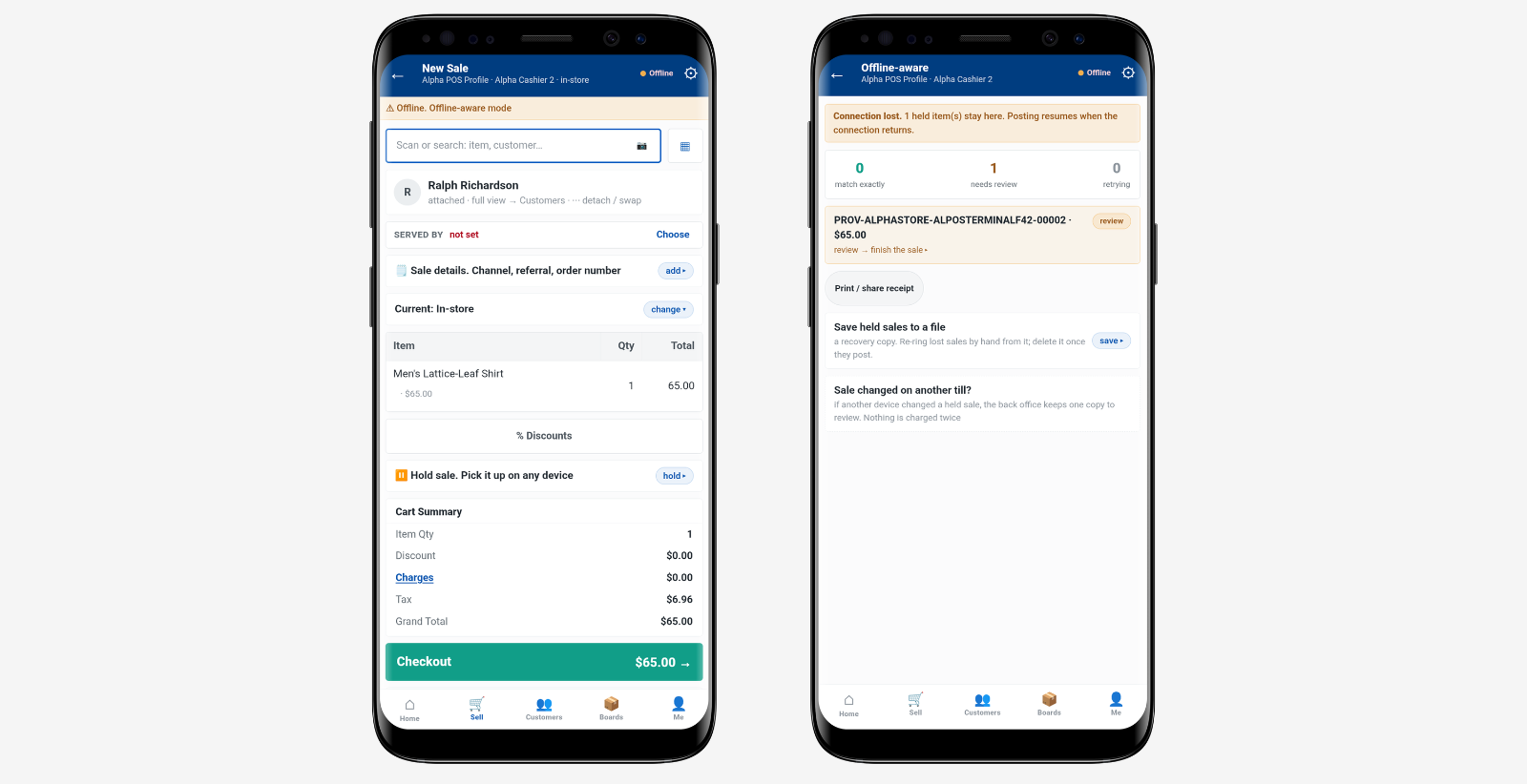
A store processes hundreds of transactions over a weekend. Returns, exchanges, loyalty redemptions, and promotional pricing all affect margin. But the finance team does not see any of it until someone exports, uploads, or manually reconciles the numbers. By then, the picture is already a few days old. This is a familiar pattern for any retailer whose POS and accounting run on different systems.
Purchasing Runs on Yesterday’s Numbers
Buyers often make decisions based on stock reports that were accurate when they were pulled but are no longer current by the time an order goes out. If a product sold through faster than expected at one location, that signal may not reach purchasing until the reorder window has passed. Retailers exploring how web-based platforms reduce these kinds of operational gaps often point to purchasing as the area where delayed data costs them the most.
What Retail ERP Software Should Do for a Store
This is worth being specific about. A retail ERP is not just accounting software with a few retail features attached. It should bring financial discipline into the daily rhythm of how a store operates.
Keep Sales and the Ledger in Step
Every sale, return, and exchange should hit the books the moment it happens. Not at end of day, not after a batch upload. When the ERP and financial layer connects directly to store operations, the finance team stops chasing numbers and starts working with them. Revenue recognition aligns income with delivery milestones. AR and AP aging reports drill down to the invoice level. Month-end close gets shorter because there is nothing left to reconcile. Cash forecasting shows projected requirements by period so treasury decisions are based on real activity rather than estimates.
Make Purchasing Decisions From Current Stock
Retail ERP software should feed buyers with live sell-through and stock data so orders go out based on what is actually moving. Serial and batch tracking with expiry dates keeps traceability tight for regulated products. Landed cost allocation attaches freight, customs, and handling charges to each item so margin calculations reflect true cost, not just the wholesale price. Three-way matching between orders, receipts, and invoices catches billing errors before you overpay. Supplier performance tracking by delivery accuracy, pricing, and lead time gives buyers the data they need to negotiate better terms or move away from underperforming vendors.
Handle Approvals Before They Become Problems
Budget controls should work at the point of spending, not as an afterthought. Budget alerts with stop, warn, and alert levels keep spending in check. Approval workflows route exceptions to the right people before they hit the books. When these controls sit inside the same platform as your POS and inventory, they catch issues faster because the data is current.
Support More Than One Location
For retailers with multiple stores, retail ERP software needs to handle multi-currency with automatic conversion and period-end revaluation. Consolidated reporting across entities should work without stitching together exports from each location. Location-level margin tracking lets you compare store performance side by side and spot underperformers early. Stock valuation methods like FIFO or moving average keep cost of goods accurate across the network. A practical features and buying checklist for retail systems should test whether a platform handles all of this natively or whether it relies on workarounds.
Give Everyone Access to the Numbers That Matter
Drill-to-source reporting lets you click from a summary figure all the way down to the original transaction. Bank statement auto-import with rule-based matching cuts reconciliation time. And when your team can ask questions in plain English through natural language queries, you stop depending on one person to build every report. Retailers who act on daily signals from their sales and stock data find that accessible reporting is often the single biggest change in how quickly the business responds.
How ERP Fits Into a Bigger Retail Picture
Retail ERP software handles the financial backbone. But stores also need a POS, inventory management, CRM, loyalty and promotions, analytics, and often an online channel. When those run separately and only connect through integrations, the same timing gaps show up again, just in different places.

The Shift Toward One Operating System
The next step for most growing retailers is not adding more tools. It is getting existing functions to share the same foundation. When ERP, POS, inventory, CRM, and promotions all write to and read from one database, finance is no longer waiting for store data to arrive. Purchases reflect current stock. Promotions and loyalty programs run in sync across physical stores and online channels, with their financial impact visible immediately rather than after a manual review cycle. Retailers exploring how AI and automation run best on shared operational data find that the quality of AI output depends entirely on whether the data underneath is current or delayed.
What Changes Day to Day
Store managers see sell-through and margin data without leaving the platform. Finance closes the books faster because every transaction already posted. Buyers place orders based on projected demand from algorithms like ARIMA rather than last week’s spreadsheet. Automated replenishment triggers restock before shelves go empty. These are not big transformation moments. They are small daily improvements that add up when the data flows without interruption.
How This Comes Together in Practice
This is the direction platforms like iVendNext are built around: bringing POS, inventory, ERP, CRM, loyalty, promotions, analytics, and automation into one retail operating system, with its financial engine built on SAP Business One. For retailers, the benefit is not more software. It is fewer gaps between what happens in the store and what the business sees in its numbers.
The conversation around how CIOs are rethinking cloud versus on-prem deployment reflects this same shift. Modular design lets you start with financial controls and add more over time without replacing what you have already set up. The question is less about which retail ERP software to pick and more about whether it brings your operational and financial data into the same flow.
Retailers who understand how data-driven retail turns daily activity into profit and availability know that the answer starts with getting finance and the store floor onto the same page. That is what retail ERP software is really for.