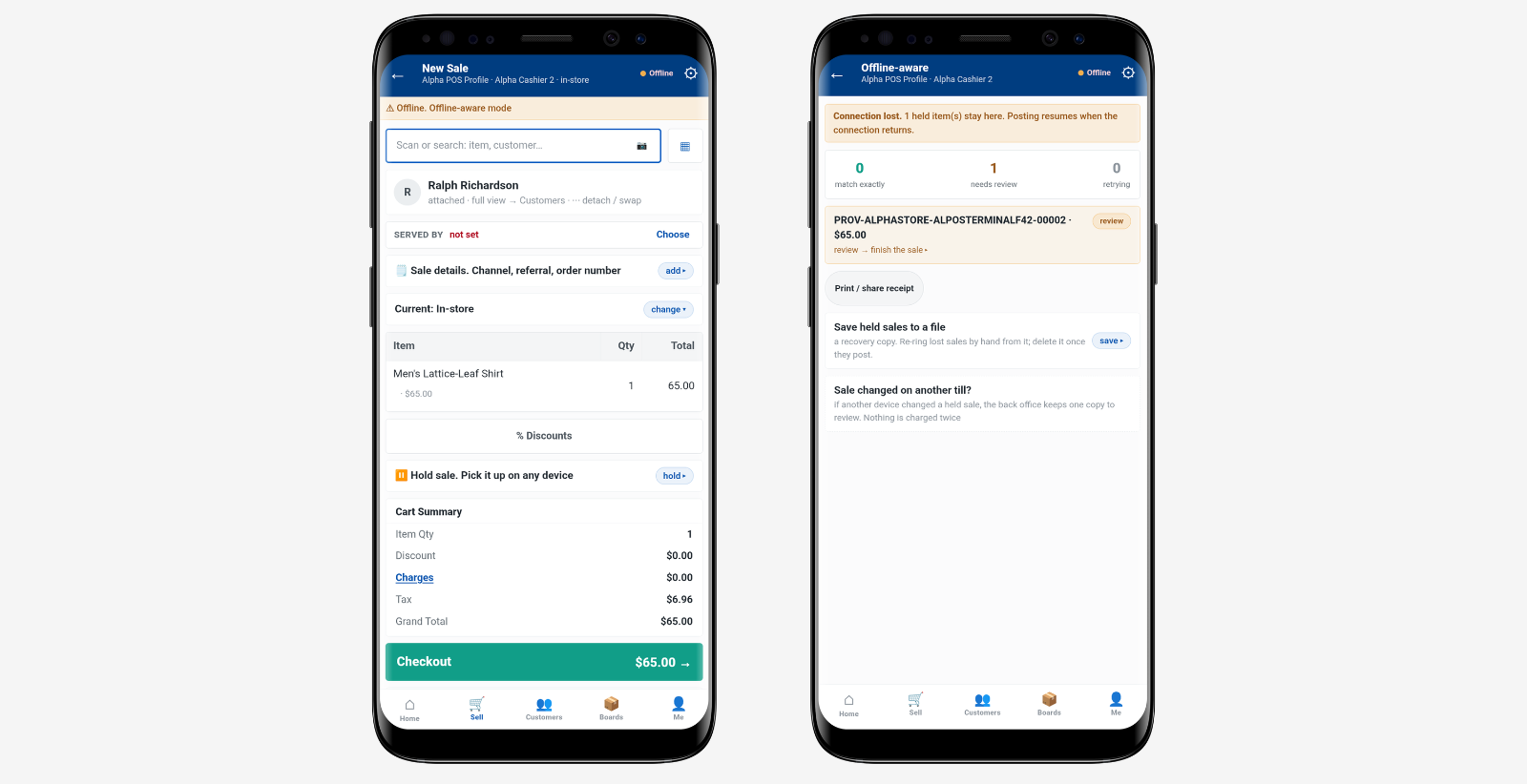
Unified commerce goes deeper. It brings the data, transactions and processes behind those channels onto a common commerce foundation, helping inventory, pricing, orders, customers, promotions and fulfillment stay consistent across the business.
The simplest distinction is this, omnichannel describes the experience retailers want to create; unified commerce describes an operating and technology model that can help deliver it.
What Omnichannel Actually Means
How Omnichannel Became the Standard
Omnichannel answered a real problem. Customers were already moving between screens and shelves while retailers treated each route as a separate business with its own targets.
The Harvard Business Review study showing that omnichannel retailing works put numbers behind it, finding that shoppers using more channels spent more. It became one of the most quoted findings in retail.
The Journeys It Describes
In most businesses omnichannel shows up as a set of journeys. Buy online and collect in store. Order in store for home delivery. Return a marketplace purchase at a counter. Browse on a phone and finish on a laptop. Each of those is worth opening, and each adds a little more coordination behind the scenes.
That coordination cost is the part usually left out of the business case. Two channels need one reconciliation habit. Four need several, usually landing on the same few people.
One Goal, Many Architectures
Omnichannel does imply a degree of data and system integration. You cannot deliver a genuine cross-channel journey without customer and inventory information travelling with the shopper. Omnichannel does not prescribe a single technology architecture for achieving that experience.
Two retailers can both be properly omnichannel and have built it in completely different ways. That is the point the unified commerce vs omnichannel comparison most often gets wrong.
What Unified Commerce Adds, and Why It Is Different
The Work Behind the Experience
Omnichannel describes the experience from the customer’s point of view. Unified commerce addresses more of what has to happen behind the scenes to make that experience reliable. The two are not alternatives, and framing unified commerce vs omnichannel as a straight choice misses how they relate.
What Customers Actually Notice
It would be wrong to suggest shoppers see none of the difference. They do not see the architecture, but they do see its results. This is the side of unified commerce vs omnichannel that gets the least attention. Accurate availability. Collection orders that hold. Returns handled without a phone call to head office.
A loyalty balance that reads the same online and at the till. Fewer promotion discrepancies. Delivery promises that turn out to be true. Those outcomes are what customers comment on, and none of them are visible in an architecture diagram.
Two Common Misreadings
The first is that unified commerce means a single supplier for everything, or replacing working systems in one weekend. Plenty of retailers get there in stages. The second is that it means no integrations at all. It does not. Most environments still integrate with something, and the aim is fewer places where the same information is owned twice.
The Data Difference: Integrated Channels vs a Common Commerce Foundation
How Integrated Environments Are Usually Built
Traditional omnichannel environments are often built by connecting POS, eCommerce, order management, CRM and inventory systems through integrations. That approach can work very well.
Where Fragmentation Starts
The challenge appears when different applications continue to own conflicting versions of important information and the retailer has to keep them aligned. This is not simply a question of speed. Synchronisation can happen in seconds, and a common platform can still run distributed services.
Integrations can also fail, and event streams can queue. The harder problem is ownership, and deciding which system is right when two of them disagree. That question, rather than speed, is the substance of unified commerce vs omnichannel.
What a Common Foundation Covers
Unified commerce aims to reduce that fragmentation by giving channels access to a common or consistently orchestrated view of the things every channel depends on.
Product
Price
Inventory
Orders
Customers
Promotions
Fulfilment
Running one commerce layer across all channels is one way of arriving at that view, though it is not the only route.
Unified Commerce vs Omnichannel: The Retail Difference
Why Fulfilment Tests It First
Fulfilment is where a mismatch becomes visible to a customer. The National Retail Federation’s research on fulfillment and delivery puts collection in store among the routes carrying a large share of holiday demand, and that is the journey most exposed when two systems hold different stock positions.
Five Questions to Test How Unified Your Commerce Really Is
What the Answers Tell You
Count the systems and the handoffs in each answer. Questions three and five are the most revealing, because they involve store staff, stock and money at the same moment.
Anything needing a second application, or a wait, is a point where the experience depends on people rather than the setup. It also explains why the unified commerce vs omnichannel comparison rarely resolves in a demonstration, since a demonstration runs on a clean dataset with nothing in flight.
Most Money Still Crosses a Counter
It helps to remember where the money still is. United States Census Bureau figures in the Quarterly Retail E-Commerce Sales report put online at well under a fifth of total retail spending. Store operations are not a secondary channel to be synchronised into.
Which to Prioritise and When

These Are Not Competing Purchases
Omnichannel is a set of customer journeys worth opening. Unified commerce is one way of keeping those journeys reliable as they multiply, which is why unified commerce vs omnichannel is a sequencing question. The honest answer to which comes first depends less on ambition than on which of the following situations you recognise.
If You Only Sell Through One Main Channel
Unified commerce may not yet be the immediate priority. The gains tend to be modest while there is only one place a customer can buy.
If You Sell Through Several Channels That Operate Independently
This is closer to multichannel than to omnichannel. Start by deciding which customer journeys genuinely need to cross channels, rather than connecting everything on principle.
If Customers Already Move Between Store and Digital
Focus on the omnichannel experience first. Availability, orders, returns, loyalty and fulfilment are where the value sits, and where customers notice.
If Those Journeys Repeatedly Fail Because Systems Disagree
Now the priority moves to the commerce foundation behind them, meaning product, stock, pricing, customer and order data. This is the point where adding another integration tends to add another place for the same information to diverge, and where the unified commerce vs omnichannel question finally has a practical answer.
If You Are Replacing Major Retail Systems
Evaluate unified commerce architecture at the start rather than adding integrations later. Retrofitting a foundation costs considerably more than choosing one.
Which of Those Five Sounds Like You?
Answer That, Then Decide
Most retailers can place themselves in one of those situations within a minute, and that placement is a better guide than any vendor comparison.
The iVendNext platform for connected customer journeys is worth a look once you know which one describes you. Work out which situation you are in first, and the unified commerce vs omnichannel debate stops being a debate and becomes a straightforward decision about sequence.