Stock Management to Avoid Overstock and Stockouts
Stock management is the practice of knowing what stock you have, where it sits, how fast it is moving, when to reorder, and what it costs to hold. For a retailer, that is more than an inventory task. It shapes sales, cash flow, margins, and the experience a customer has when they come looking for a product. When it slips, the trouble shows up in two directions at once.
Stock piles up where it does not sell, and runs dry where it does. Most retailers already hold the data to avoid both. It just does not reach the right person quickly enough to change the decision. Good stock management is less about guessing every sale and more about closing the gap between what is on the shelf and what the business can see.
How Stock Management Differs From Inventory Management
Inventory Management Covers the Whole Picture
Inventory management is the wider discipline. It accounts for everything a business holds, from raw materials to goods still in transit to finished products waiting in a warehouse. It looks at the full value of what a company owns at any given moment, which is why finance and planning teams rely on it so heavily. The scope is broad on purpose, since it has to capture every item the business has money tied up in.
Stock Management Lives on the Shelf
Stock management is the day to day side. It focuses on the items on shelves and in the stockroom that are ready to sell right now. This is where the fast decisions happen. Reordering before a shelf runs dry, transferring product to the location that needs it, and marking down slow movers before the selling window closes all live here. People often use the two terms interchangeably, and in casual conversation that is fine. But when overstock and stockouts are the problem you are trying to fix, it helps to know you are working on the stock side, where timing matters most.
Why Stock Management Matters for Retailers
Stock is usually one of the largest amounts of cash a retailer has tied up at any time. Hold too much and that cash sits frozen on a shelf. Hold too little and you turn willing buyers away. It also reaches almost every part of the operation, since sales depend on the right product being available, margins depend on buying at the right cost, and finance reporting depends on accurate stock values.
Stock Management Methods Retailers Use
There is no single way to manage stock, and most retailers blend a few approaches. Reorder point planning triggers a restock when quantities fall low. Demand forecasting projects future needs from past selling patterns. Just in time ordering keeps holding costs down by bringing stock in close to when it sells. ABC analysis focuses attention on the items that contribute most. Regular counts keep the recorded numbers honest. The right mix depends on what you sell and how many locations you run.
Why Overstocking and Stockouts Keep Happening
Most stock issues do not start with poor planning. They start with delayed data. A retailer can have a sound buying approach and still get caught out when the numbers are a few days behind what actually sold. In a 2025 article on how retailers can master inventory challenges, the National Retail Federation makes the case for responding to live sales, seasonal demand, and store-level trends rather than last year’s averages.
The Timing Problem
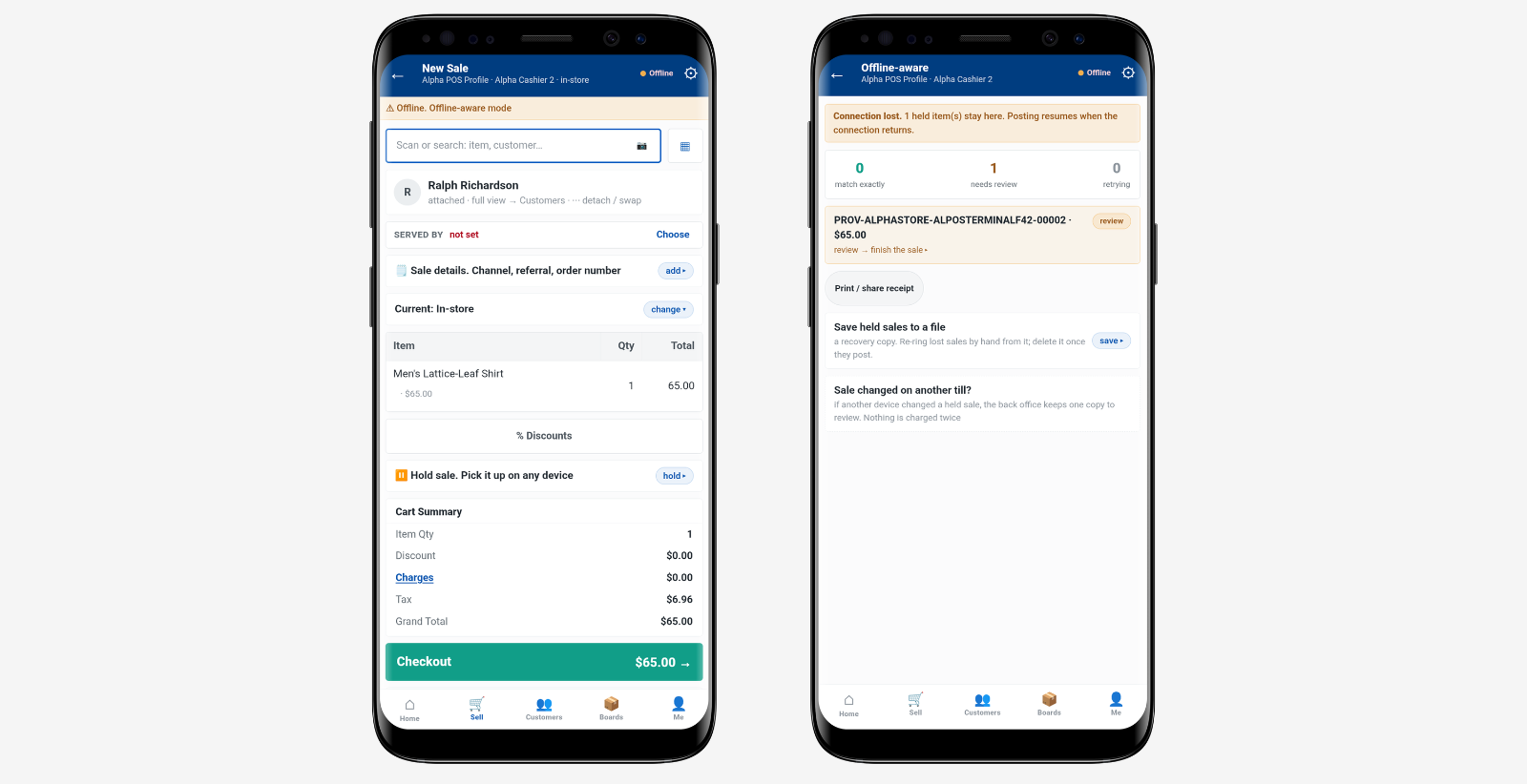
A buyer places an order based on a stock report from yesterday morning. But a weekend rush moved a third of the inventory before the report was even opened. The order goes out anyway, and now two locations are overstocked while a third runs dry. With cloud based systems showing live inventory across every location, that gap closes.
Disconnected Channels Make It Worse
When your store, warehouse, and webshop each keep their own stock counts, overselling becomes routine. A customer orders online for something that sold in store an hour earlier.
Or a transfer between locations does not update both systems at once, leaving phantom stock in one place and a shortage in another. The risk grows whenever stock relies on periodic syncs rather than a live shared view.
Counts That Drift Out of Date
Even with connected channels, the number on the screen can drift from what is on the shelf. Miscounts, breakage, and theft open a gap between recorded and actual stock. Regular physical counts that reconcile against book values close that gap, so reorder decisions rest on what is really there rather than a figure that stopped being true weeks ago.
How Retailers Can Reduce Overstock

Set Reorder Points Based on Sell-Through, Not Just Minimums
Static reorder points lead to static problems. Instead of restocking when inventory hits a fixed number, tie your triggers to how fast products are selling. When your system reads live sales data, reorder points adjust to current velocity, so a product selling three times faster than forecast triggers a restock earlier than a slow mover.
Use Forecasting That Learns From Your Business
Forecasting on last year’s numbers is better than guessing, but it misses shifts that happen between review cycles. Forecasting tools read your live sales, seasonal demand, and store-level trends to project what each location will need next, and they sharpen over time.
Feeding in upcoming promotions and loyalty pushes matters too, since a short-term offer, birthday reward, or loyalty campaign can move far more units than a normal week. Retailers focused on turning daily signals into profitable action tend to see fewer surprises in both directions.
Track Costs, Not Just Quantities
Knowing how much stock you have is only half the picture. Knowing what it cost is where stock management meets profitability. Valuation methods like FIFO or moving average keep your cost of goods accurate.
Landed cost allocation attaches freight, customs, and handling to each item, so the margin you report reflects what you actually paid. When your finance and accounting systems connect to inventory, these numbers stay in step on their own.
How Retailers Can Reduce Stockouts
Automate Replenishment Triggers
When inventory is connected to live sales data, the system can generate purchase or transfer requests the moment levels drop below a set threshold. Shelves stay full without someone checking every category every morning.
Open Up Fulfillment Options
Stockouts hurt less when you have more ways to fill orders. Buy online pick up in store, ship from store, and endless aisle with substitutions all depend on accurate, shared inventory across locations.
If a product is out of stock at one store but available at another, the customer does not have to leave empty handed, which makes flexible fulfillment one of the biggest drivers of recovered sales.
Keep Traceability Tight
For products with shelf life, batch numbers, or serial tracking, oversight needs to go deeper than quantity and location. Serial and batch tracking with expiry dates supports compliance and lets your team act before products expire. When the system flags items nearing their shelf life, you can mark them down or transfer them rather than write them off.
Getting Started Without Replacing Everything
Not every retailer can overhaul their systems overnight. The practical path is to start with the area that creates the most pain and build from there.
Start With Visibility
If you cannot see real time stock across all locations and channels, that is the first thing worth fixing. Platforms with modular design that lets you start small let you begin with inventory and add purchasing, financial controls, and AI over time.
iVendNext is built this way, connecting POS, inventory, finance, CRM, promotions, and analytics on one database so stock has the context it needs from day one.
Layer In Intelligence
Once your data is shared, forecasting and natural language queries start delivering useful results. You can ask in plain English which products are trending down or which location turns slowest. Platforms with AI and workflow automation make this practical because they read from the same database as inventory, sales, and finance.
Let AI Flag What You Would Miss
Anomaly detection watches for patterns that fall outside the expected range, like a sudden drop in sales for a top performer or an unusual spike in returns. A system that reads from the same database as inventory, sales, and finance can catch these on its own.
Retailers exploring how AI in retail that gets work done say anomaly detection is one feature they did not expect to lean on as much as they do.
Better Stock Management Starts With Faster Decisions
Good stock management is not about predicting every sale perfectly. It is about closing the distance between what is selling and what the business knows about it.
When that gap is small, overstock shrinks, stockouts drop, and the calls your team makes about what to order, where to send it, and when to mark it down all get better. For retailers still working from periodic reports and manual checks, the biggest improvement in stock management often comes not from a new strategy, but from getting the data to arrive in time.