
Home > Resources > Retail technology explained > Unified commerce platform
Channels and customer journeys
Unified commerce platform for connected customer journeys
Customers notice when prices, stock, orders or loyalty do not match between the store and the web. The issue is usually not the channel. It is the data behind the journey.
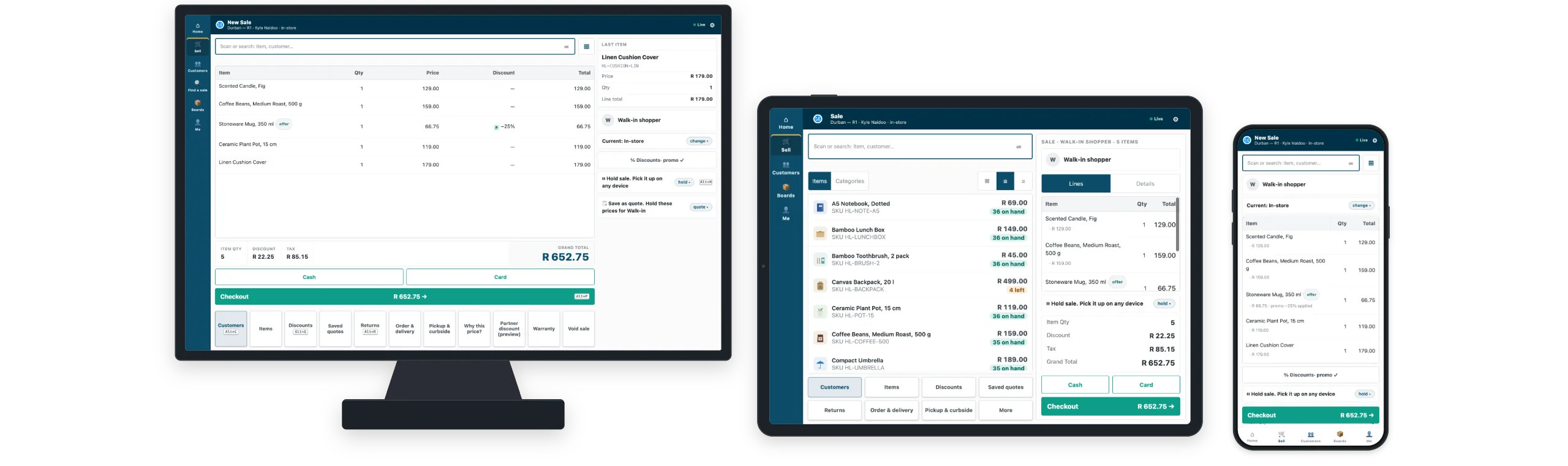
A unified commerce platform keeps stores, the web store and loyalty on the same product, price, stock, customer and order data. iVendNext, the open retail platform, runs the stores and keeps your web store in step with them, so the journey holds from search to sale to collection.
What it is
What does a unified commerce platform help retailers manage?
A unified commerce platform keeps product, price, stock, customer and order data consistent across stores, the web store and apps. What a customer sees online should match what they find in store, at the till, in loyalty and at a return.
A retailer may have stores, a web store and a loyalty programme, each working well alone. The problem appears when one hands the journey to another: a price updates in one channel before the other, or a collect-in-store order fails because the web store cannot see the right stock.
These are data problems more than channel problems. A unified commerce platform gives every channel a reliable view of the retail information it needs.
The difference
How is unified commerce different from omnichannel retail?
Omnichannel: channels connected by sync
Channels are linked, but data may still live in different systems and move through syncs.
Unified commerce: channels on shared data
Channels work from shared product, price, stock, customer and order data, so journeys are easier to keep consistent.
Why journeys break
Where customer journeys break across channels
Customers feel channel gaps before the business sees them in reports. The cause is usually different product, price, stock, order or customer data in each channel.
The online price does not match the store
A customer sees an offer online and comes in to buy. If the till does not have it, the store team explains a problem the customer should never have seen.
Collect in store fails at the counter
Collection depends on accurate stock, the right store and a pickup process tied to the web order. If one step breaks, the customer waits at the counter.
Loyalty does not follow the customer
Customers expect points and purchase history to work wherever they buy. If loyalty sits apart from the sale, stores need workarounds.
What to look for
What should retailers look for in a unified commerce platform?
Consistent product and pricing
Product details, variants, prices and promotions managed centrally and published to every channel.
Stock every channel can trust
Each channel sees current available stock, so web orders are not promised from stock that has gone.
Orders that move across channels
Collect in store and selling from another store's stock, without a separate manual process for each journey.
Customer and loyalty continuity
Customer profiles, purchase history and loyalty balances available wherever the customer buys.
Room for the channels you add later
A documented way to connect the next channel, through a ready connector or the platform's APIs.
How iVendNext supports it
Connected customer journeys with iVendNext
iVendNext keeps your web store in step with the stores' product, price and stock, and keeps loyalty with the customer at every till.
Product and pricing stay aligned
Products, variants, categories, pictures, prices and tax rates go from iVendNext to your WooCommerce store, so the web shows what the stores sell.
Stock promises are more reliable
Stock for the warehouses you choose goes to the web store every five minutes by default, and the store's figures are checked every hour.
Collect in store, handed over properly
Shoppers choose a store to collect from. The store sees the web orders it must pick, and each hand-over records who collected the order and when.
Sell from another store's stock
Cashiers see stock across the network, reserve it and fulfil from another store or the warehouse, so an empty shelf does not lose the sale.
Loyalty follows the customer
Points, loyalty levels and purchase history stay with the customer record, and the cashier sees each customer's balance at the till.
Other web stores, through the APIs
Other web stores connect through iVendNext's REST APIs and the event feed, set up by your partner.
The wider platform
Where unified commerce fits in the wider platform
Retail management software and finance
Accurate stock, buying and financial records shape what channels can show and promise.
Retail management softwareEnterprise POS and store execution
Store sales, returns and stock movements reach the wider operation quickly, keeping web availability in step with the stores.
Enterprise POS softwareAI in retail operations
Forecasts and alerts depend on reliable customer, order and stock information across channels.
AI retail managementQuestions to ask
Questions to ask before choosing a unified commerce platform
- Is product and price data held in one record, or does each channel keep its own copy?
- Can the web store see stock across stores and warehouses?
- How does collect in store work, from the web order to the hand-over?
- Is customer and loyalty data one profile across channels?
- How does a new channel connect: a ready connector or an API?
- How often does stock reach the web store, and who checks it?
Questions
Unified commerce: common questions
What is a unified commerce platform?
A unified commerce platform keeps product, price, stock, customer and order data the same across stores, the web store and apps. Every channel works from consistent information, so the customer's journey does not break between them.
What is the difference between unified commerce and omnichannel retail?
Omnichannel links separate channels through integrations; unified commerce works from shared data. With omnichannel, consistency depends on how well systems sync.
Does a unified commerce platform replace the POS?
No. The POS stays the in-store selling layer. A unified commerce platform connects the data the POS, the web store and loyalty use.
Can iVendNext connect to my web store?
Yes. iVendNext has a ready connector for WooCommerce, and other web stores connect through its APIs and event feed, set up by your partner.
Does iVendNext replace my existing systems?
Use all of it, or connect what you already have. iVendNext runs the stores and the stock, and connects the web store and the ERP you keep.
How long does a unified commerce project take?
It depends on the channels, the quality of product and stock data, and the journeys in scope. Many retailers start with the stores and the web store, then add journeys in later phases.
Do your stores and your web store work from the same numbers?
See how iVendNext keeps your web store in step with your stores, and loyalty with the customer.
Building retail solutions? Talk to our partner team.
