
Home > Resources > Retail technology explained > Retail management platform
Retail technology explained
Retail management platform for retail chains
Most retailers do not need more systems. They need their stores, stock, finance, customers and channels to work from the same data.
A retail management platform brings store activity, stock, buying, finance, customer data and reporting closer together. iVendNext is the open retail platform: it runs the stores, the stock and the web store, and connects to the ERP and systems you already run.
The category
What does a retail management platform help retailers manage?
A retail management platform helps retailers manage store activity, inventory, buying, finance, customer data and reporting from one shared base. The value is not in having more features. It is in teams working from the same information.
One view of stores, stock and channels
Sales, stock levels and channel activity visible together, without manual exports or delayed reports.
One base for finance, stock and workflows
Purchasing, stock, store operations and finance connected, so month-end is not a reconciliation exercise.
Better data for reports and automation
Reports and automation work better on current retail data than on old exports from different systems.
The problem
Why disconnected retail systems become harder to manage
Most retailers already have software. The problem starts when every system shows a different version of the business.
Sales close in one place. Stock changes somewhere else. Finance waits for reconciliation. Promotions behave differently across channels. Customer data sits across the POS, loyalty and the web store. Reports arrive after the decision has passed.
A retail management platform reduces these gaps. It gives retailers a shared base for stores, stock, buying, finance, customers, channels and reporting, so teams spend less time checking numbers and more time acting on them.
What it connects
Four areas that need to work together
Retail management software
Inventory, buying, finance and reporting on a reliable base, beyond spreadsheet checks and delayed reports.
Retail management softwareEnterprise POS software
Checkout, pricing, promotions, returns, tenders, tax and settlement kept the same across every store.
Enterprise POS softwareUnified commerce platform
Product, price, stock, customer and order data kept in step between stores and the web store.
Unified commerce platformAI in retail management
Forecasts, alerts, plain-language questions and workflow automation on live retail data.
AI retail managementThe iVendNext view
How iVendNext brings retail operations together
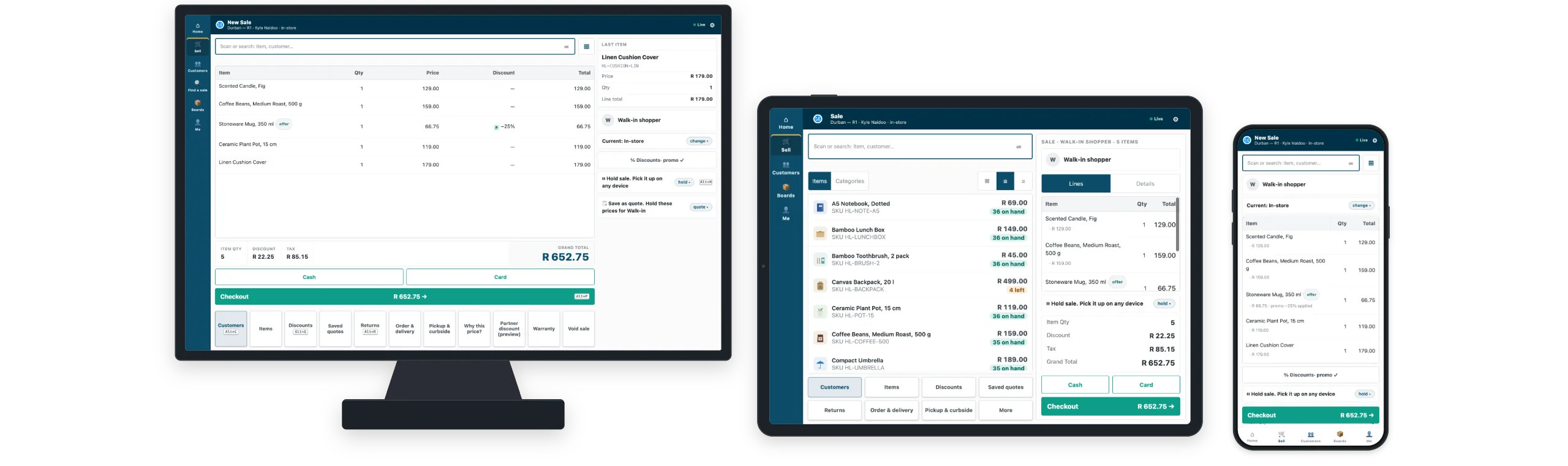
iVendNext is the open retail platform. It runs the stores on one iVendNext POS across till, tablet and phone, runs the stock from the warehouse to the shelf with iVendNext Handheld, and connects to the ERP and systems you already run: SAP Business One, SAP S/4HANA, Acumatica, NetSuite, Sage X3 and many others. Use all of it, or connect the parts you already have.
A sale should do more than complete checkout. It should update stock, reach finance, add to the customer record and support the next decision. The same should happen when teams receive stock, move it between stores, launch a promotion or hand over a web order.
Store teams follow the same processes in every store, while head office works from the same information across locations, channels and markets.
What changes
What changes with iVendNext
When the platform works as one, the difference is felt across the business, not only at checkout.
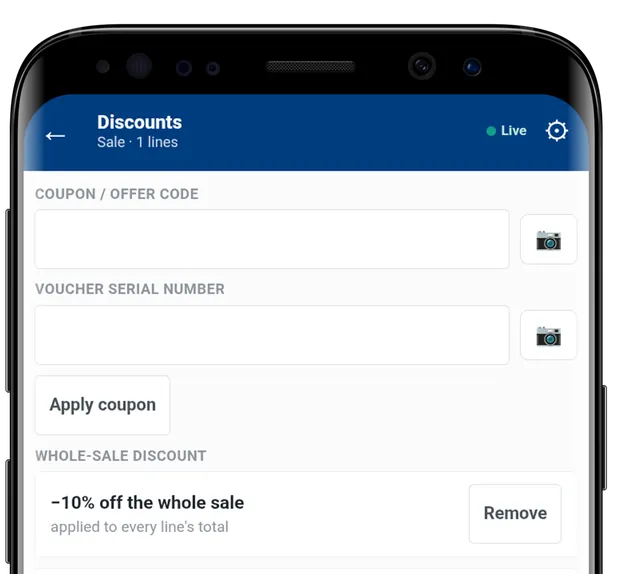
Store selling becomes more consistent
iVendNext POS on till, tablet and phone applies the same pricing, promotions, returns, tenders and approvals in every store.
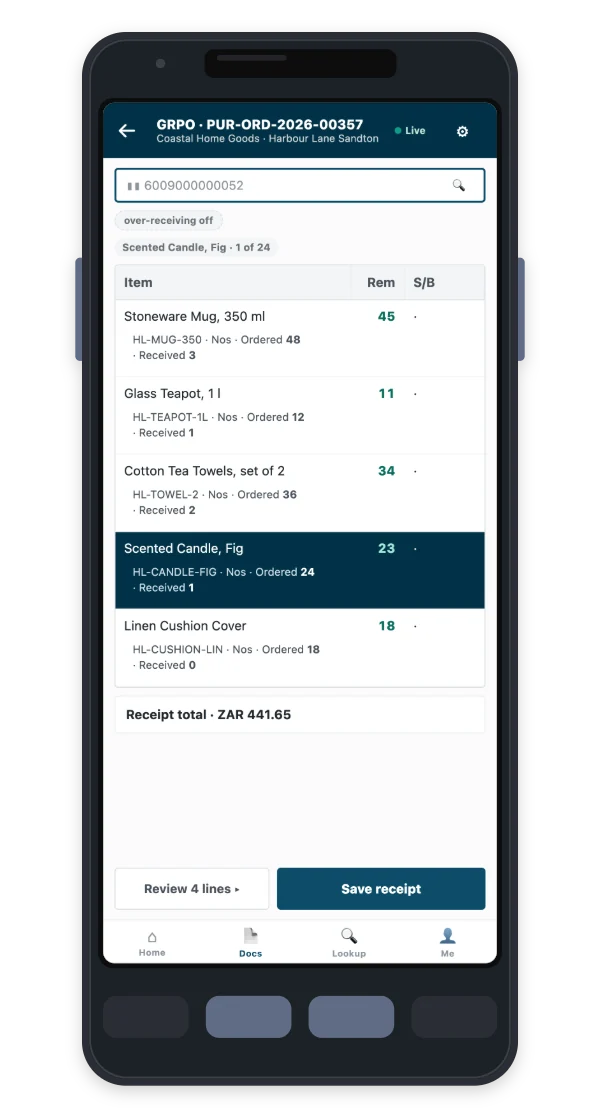
Stock and buying stay closer to demand
Sales, receipts, transfers and replenishment work from the same stock position. Foresight forecasts demand and drafts the purchase orders for buyers to review.
Finance gets cleaner handoffs
Sales, purchasing, stock movement, supplier invoices and landed costs reach finance with fewer checks, in iVendNext's own back office or in the ERP you keep.
Customers are recognised at every till
Loyalty levels, points, gift cards, coupons and customer history stay with the sale, and the cashier sees each customer's balance.
The web store works from the same data
Products, prices and stock go to your WooCommerce store, paid web orders come back, and stores pick and hand over web orders for collection. Other web stores connect through iVendNext's APIs and event feed.
Teams get answers sooner
Reports, dashboards, forecasts and workflow automation use current retail data, so teams answer questions and move routine work on sooner.
How it compares
A retail platform, a POS, an ERP or separate systems
A POS helps stores sell. A finance system keeps the records. A web store sells online. Loyalty brings customers back. The trouble starts when each works from a different version of the data.
A POS on its own
Runs checkout, payments, returns and the day's close. Buying, finance, customer programmes and the web store are often managed elsewhere.
An ERP or finance system
Runs finance, purchasing and the books. Store selling, promotions, loyalty and the customer's journey often need separate retail applications.
Separate retail systems
Specialist applications joined by integrations. They meet specific needs, with more handoffs, syncs and checks between teams.
A retail platform
Store activity, stock, buying, finance, customers and reporting in one shared view, connected to the ERP you choose to keep.
Questions
Retail management platform: common questions
What is a retail management platform?
A retail management platform is software that runs a retailer's core work, POS, stock, buying, finance, customers, channels and reporting, from one shared base. It cuts the handoffs between disconnected tools and gives every team the same view of the business.
How is a retail management platform different from retail management software?
Retail management software usually means the back-office work: stock, buying, finance and reporting. A platform also runs the stores, the channels and the customer programmes, and connects them all to the same data.
Is iVendNext a POS or a platform?
iVendNext is the open retail platform. iVendNext POS is its selling app, one POS on till, tablet and phone; iVendNext Handheld runs the stock; and the Integrations Hub connects the ERP and the web store.
Does iVendNext replace my existing systems?
Use all of it, or connect what you already have. Some retailers run everything on iVendNext; others keep their ERP for the books and run the stores on iVendNext. The right path depends on your stores, markets and current systems.
Which ERPs does iVendNext connect to?
iVendNext connects to SAP Business One, SAP S/4HANA, Acumatica, NetSuite, Sage X3 and many others. Your ERP keeps the books, iVendNext runs the stores, and the Integrations Hub shows every sync on one screen.
Where does AI fit inside a retail management platform?
AI works best close to live data. In iVendNext, Foresight drafts purchase orders from forecasts, CoPilot answers questions on every back-office page, and AI Gateway connects the assistant you already use.
Retail runs better when every team works from the same numbers
Get a walkthrough of how iVendNext runs your stores, stock and channels, and connects the ERP you already have.
Building retail solutions? Talk to our partner team.
